Rheims
The First International Aviation Meeting.
| Balloons |
| Airships |
| Zeppelins |
| Santos-Dumont |
| Henry Farman |
| Wrights in France |
| The Channel |
| Rheims |
| London-Manchester |
| Chavez flies Alps |
| Round Britain Race |
| Roland Garros |
| Aerobatics |
| Europe to Egypt |
| The Men |
| The Machines |
| Bibliography & Links |
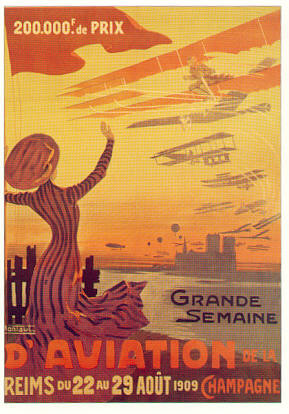 Following
hard on the heels of Louis Blériot's
successful crossing of the English Channel, the
first ever international aviation meeting was organised at Rheims in August
1909. The event was sponsored by the great French champagne houses, such
as Bolinger and Mumm, and so the venue was in the heart of the Champagne
region of France. It was also partly inspired by Henry
Farman's historic cross-country
flight the year before from Bouy to Rheims. The 'Great Week of Aviation'
was intended to be a showcase of man's conquest of the air and progress
in aeronautics. There would be display flights, record attempts and races.
Public interest in aviation was at fever pitch during the summer of 1909
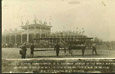
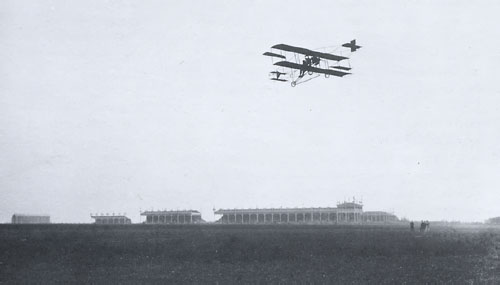
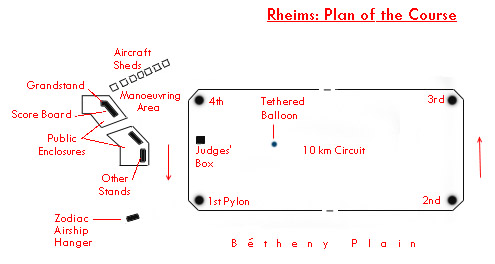
and so the meeting was eagerly anticipated. A rectangular course of 10
km (6 miles) was marked out on a large plain near the village of Bétheny,
5 km (3 miles) from Rheims, and grandstands, public enclosures and aircraft
sheds were erected. The stands could hold 5,000 and included a restaurant
that could seat 600 diners at a time. The course was marked by tall pylons
at each corner, and a take-off area was designated in front of the sheds
so that the aeroplanes could become airborne before they joined the course.
Special trains were laid on to bring the crowds of spectators from Paris.
Some 38 aeroplanes were entered for the competitions to be held over the
week, which included speed, distance and altitude contests. The most prestigious
competition, however, would be the first race for the Gordon Bennett International
Aviation Cup. This was to be an annual competition in which pilots would
represent their countries in a speed trial over 20 km.
Following
hard on the heels of Louis Blériot's
successful crossing of the English Channel, the
first ever international aviation meeting was organised at Rheims in August
1909. The event was sponsored by the great French champagne houses, such
as Bolinger and Mumm, and so the venue was in the heart of the Champagne
region of France. It was also partly inspired by Henry
Farman's historic cross-country
flight the year before from Bouy to Rheims. The 'Great Week of Aviation'
was intended to be a showcase of man's conquest of the air and progress
in aeronautics. There would be display flights, record attempts and races.
Public interest in aviation was at fever pitch during the summer of 1909
and so the meeting was eagerly anticipated. A rectangular course of 10
km (6 miles) was marked out on a large plain near the village of Bétheny,
5 km (3 miles) from Rheims, and grandstands, public enclosures and aircraft
sheds were erected. The stands could hold 5,000 and included a restaurant
that could seat 600 diners at a time. The course was marked by tall pylons
at each corner, and a take-off area was designated in front of the sheds
so that the aeroplanes could become airborne before they joined the course.
Special trains were laid on to bring the crowds of spectators from Paris.
Some 38 aeroplanes were entered for the competitions to be held over the
week, which included speed, distance and altitude contests. The most prestigious
competition, however, would be the first race for the Gordon Bennett International
Aviation Cup. This was to be an annual competition in which pilots would
represent their countries in a speed trial over 20 km.
|
|
The pilots included
some of the most famous French aviators, such as Blériot, Farman
and Latham, but Wilbur and Orville Wright (who were in Europe) declined
to participate in such 'amusements'. It fell to Glen Curtiss to represent
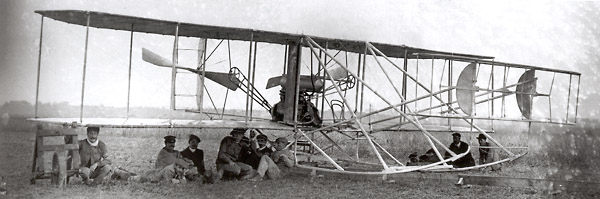
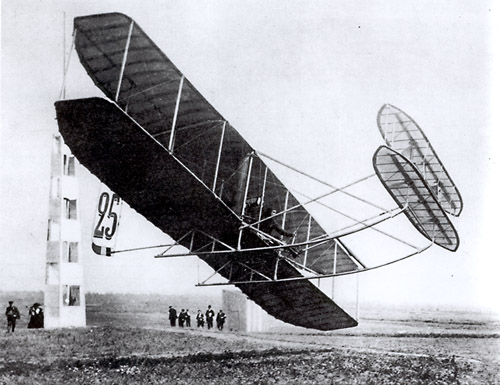
the USA in the Gordon Bennett competition. Six Wright Flyers were
present, though, with two being flown by Paul Tissandier and the Comte
de Lambert, who were pupils of Wilbur. Alberto Santos-Dumont was due to
appear at Rheims with his Demoisellebut
was unable to attend. Capitain Ferber, who was a serving army officer,
was forced to fly under the pseudonym of "Monsieur de Rue" in order to
satisfy his superiors. George Cockburn, a Scot and founding member of the
Aero Club of Great Britain, was the only British pilot at the meeting.
| Entrant | Aircraft | Notes |
| Louis
Blériot
Louis Bréguet Etienne Bunau-Varilla George Cockburn Glen Curtiss Léon Delagrange Robert Esnault-Pelterie Henry Farman M. Fernandez André Fournier Jean Gobron Comte de Lambert Henri Rougier M. de Rue M. Sanchez-Beza L. Schreck Société Antoinette Société Ariel Roger Sommer Paul Tissandier Gabriel Voisin |
Blériot
XI/XII/XIII
Bréguet biplane Voisin Farman III Curtiss-Herring biplane Blériot XI R.E.P. 2/2bis Farman III Wright Type A Voisin Voisin Wright Type A Voisin Voisin Wright Type A Wright Type A Antoinette IV/VII/VIII Wright Type A Farman III Wright Type A Voisin |
Leblanc
alternative pilot
A relative novice
Guffroy alternative pilot
Former motor racer
Former motor racer
Pilots Latham
& Demanest
Piloted by Paulhan & Zipfel |
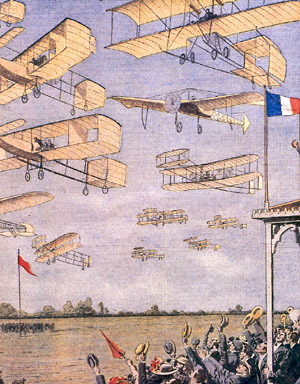 The
Meeting opened on Sunday 22 August and ran for eight days until Sunday
29 August 1909. Pilots were required to fly between 10 a.m. and 7 p.m.
- when the public enclosures would be fullest - but this meant that there
could be no competitive flying during the periods of the day when the wind
was calmest: just after dawn and at dusk. In 1909 most pilots favoured
flying in a dead calm if at all possible, and so in recognition of this
the organising committee arranged a system of coloured flags to indicate
to the public whether they were likely to see flying on any given day.
A black flag meant that the wind was too strong for any flying; a white
flag meant that flying was possible; and a red flag meant that aeroplanes
had already flown or were in the air. The flags were sited along the road
to Bétheny and in the town of Rheims itself.
The
Meeting opened on Sunday 22 August and ran for eight days until Sunday
29 August 1909. Pilots were required to fly between 10 a.m. and 7 p.m.
- when the public enclosures would be fullest - but this meant that there
could be no competitive flying during the periods of the day when the wind
was calmest: just after dawn and at dusk. In 1909 most pilots favoured
flying in a dead calm if at all possible, and so in recognition of this
the organising committee arranged a system of coloured flags to indicate
to the public whether they were likely to see flying on any given day.
A black flag meant that the wind was too strong for any flying; a white
flag meant that flying was possible; and a red flag meant that aeroplanes
had already flown or were in the air. The flags were sited along the road
to Bétheny and in the town of Rheims itself.
The competitors had been promised that the Bétheny Plain would be clear of crops to facilitate forced landings, but on arrival they found to their dismay that there were still some fields of standing crops and many more full of sheaves of wheat and barley drying in the sun. It was obvious that these would provide a dangerous hazard to any pilot making an emergency landing, and indeed this proved to be the case during the week. The organisers were somewhat lucky that no one was more seriously hurt as engine failure became an every day occurrence.
Sunday 22 August

 If
anything, the weather was even worse on the morning of the fourth day of
the meeting. Black clouds scudded across the sky and occasionally produced
squally showers. Nobody flew before 4 p.m. when Latham, Fournier, "de Rue"
and Paulhan took off, encouraged by brighter patches of sky and the wind
dropping to about 15 mph (24 kph). André Fournier's bad luck continued
when he was forced down with engine trouble. The wheels of his Voisin
touched a haystack and somersaulted it onto its back. Fortunately, anxious
spectators in the stands could see the pilot walking round his machine
through their binoculars, and a car was despatched to collect him. The
accident ended Fournier's active involvement in the meeting.
If
anything, the weather was even worse on the morning of the fourth day of
the meeting. Black clouds scudded across the sky and occasionally produced
squally showers. Nobody flew before 4 p.m. when Latham, Fournier, "de Rue"
and Paulhan took off, encouraged by brighter patches of sky and the wind
dropping to about 15 mph (24 kph). André Fournier's bad luck continued
when he was forced down with engine trouble. The wheels of his Voisin
touched a haystack and somersaulted it onto its back. Fortunately, anxious
spectators in the stands could see the pilot walking round his machine
through their binoculars, and a car was despatched to collect him. The
accident ended Fournier's active involvement in the meeting.

 At
last on Thursday, a day dawned which promised good flying weather and most
pilots decided to take to the air in the gentle morning breeze: Latham
improved his personal distance record to 70 km (43.5 miles) in 1 hr. 1
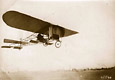
min. 51 sec.; Blériot practised on his two-seater Type XII
for the passenger carrying competition (the Prix des Passagers)
by taking up his friend Leblanc; and Tissandier, Sommer and Cockburn all
took their turn at retrieving their planes from the fields after engine
failure. Cockburn damaged his Farman's tail unit on one of the ubiquitous
sheaves of wheat and had to make repairs. Curtiss contented himself with
a test flight of his modified biplane, which had been stripped of any excess
weight and was now christened the 'Rheims Racer'.
At
last on Thursday, a day dawned which promised good flying weather and most
pilots decided to take to the air in the gentle morning breeze: Latham
improved his personal distance record to 70 km (43.5 miles) in 1 hr. 1
min. 51 sec.; Blériot practised on his two-seater Type XII
for the passenger carrying competition (the Prix des Passagers)
by taking up his friend Leblanc; and Tissandier, Sommer and Cockburn all
took their turn at retrieving their planes from the fields after engine
failure. Cockburn damaged his Farman's tail unit on one of the ubiquitous
sheaves of wheat and had to make repairs. Curtiss contented himself with
a test flight of his modified biplane, which had been stripped of any excess
weight and was now christened the 'Rheims Racer'.
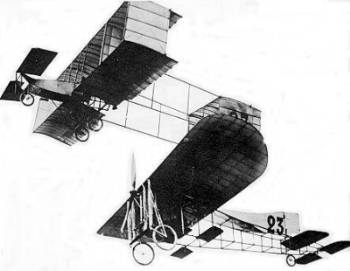
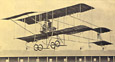
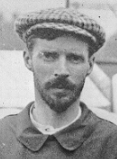 Eventually,
at 7:30 p.m. the judges flagged that they could no longer time him because
of the gloom and rising mist. Farman completed one more lap and then came
into land. He was shivering with cold but "was seized upon by the enthusiastic
crowd and carried in triumph to the restaurant where a scene of almost
delirious excitement was witnessed" (The Times). A military band crashed
out the Marseillaise followed by "God Save the King" in recognition
of Farman's Anglo-French status. He had officially covered 180 km (112
miles) in 3 hr. 4 min. 56 sec. and won the Grand Prix de la Champagne.
However, he could have gone further because he started with 62 litres (13.5
gallons) of fuel and finished with 15 litres (3 gallons). What was even
more remarkable was that he had only finished fitting a new 50 hp Gnôme
engine (in place of the troublesome Vivinus) and making its propeller that
day! Farman finally extricated himself from the crowd by jumping over the
barrier into the pilot's paddock and walking back to his shed where he
was congratulated by his brother, Dick, and lit a well-earned cigarette.
Eventually,
at 7:30 p.m. the judges flagged that they could no longer time him because
of the gloom and rising mist. Farman completed one more lap and then came
into land. He was shivering with cold but "was seized upon by the enthusiastic
crowd and carried in triumph to the restaurant where a scene of almost
delirious excitement was witnessed" (The Times). A military band crashed
out the Marseillaise followed by "God Save the King" in recognition
of Farman's Anglo-French status. He had officially covered 180 km (112
miles) in 3 hr. 4 min. 56 sec. and won the Grand Prix de la Champagne.
However, he could have gone further because he started with 62 litres (13.5
gallons) of fuel and finished with 15 litres (3 gallons). What was even
more remarkable was that he had only finished fitting a new 50 hp Gnôme
engine (in place of the troublesome Vivinus) and making its propeller that
day! Farman finally extricated himself from the crowd by jumping over the
barrier into the pilot's paddock and walking back to his shed where he
was congratulated by his brother, Dick, and lit a well-earned cigarette.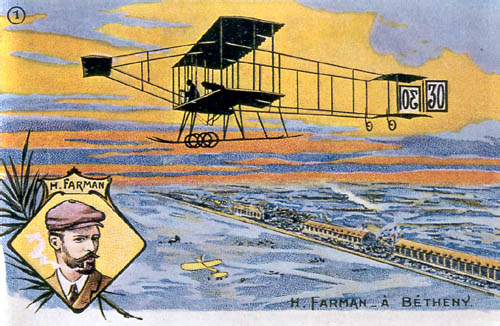
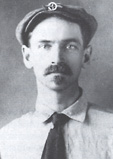 If
Friday had been a day of high drama, Saturday promised to be no less exciting.
Today the
Gordon Bennett International Aviation Cup would be won.
The rules were simple. Each country could enter up to three competitors.
Each competitor would have one opportunity (and only one) to fly 20 km
in the fastest time they could. The winner would receive a magnificent
trophy worth £500 and £1,000 in prize money, both provided
by James Gordon Bennett, the proprietor of the New York Herald and
Paris Herald. The next year's competition would then be defended
in the winner's home country. Latham, Blériot and Lefebvre had been
chosen earlier in the week to represent the French Aero Club. George Cockburn
would represent the Aero Club of Great Britain. And Glen Curtiss would
represent the Aero Club of America. The weather was hot and sunny, with
a light breeze of around 5 mph (8 kph).
If
Friday had been a day of high drama, Saturday promised to be no less exciting.
Today the
Gordon Bennett International Aviation Cup would be won.
The rules were simple. Each country could enter up to three competitors.
Each competitor would have one opportunity (and only one) to fly 20 km
in the fastest time they could. The winner would receive a magnificent
trophy worth £500 and £1,000 in prize money, both provided
by James Gordon Bennett, the proprietor of the New York Herald and
Paris Herald. The next year's competition would then be defended
in the winner's home country. Latham, Blériot and Lefebvre had been
chosen earlier in the week to represent the French Aero Club. George Cockburn
would represent the Aero Club of Great Britain. And Glen Curtiss would
represent the Aero Club of America. The weather was hot and sunny, with
a light breeze of around 5 mph (8 kph).